


Refractory Materials
Refractory supplies for high-heat builds
Fire brick, refractory mortar, castable refractory cement and ceramic fiber insulation for pizza ovens, fire pits and forges.
Everything a wood-fired oven, outdoor fireplace, fire pit, forge or kiln needs to stand up to real heat, delivered to your home or job site. These are the same refractory materials BrickWood Ovens builds its pizza oven kits around, chosen by people who help backyard builders every day.
- Rated from 2,300°F to 3,000°F
- Outdoor-safe mortar options
- Delivered nationwide
- Real builder support


- Fire Brick
- Refractory Mortar
- Castable Refractory Cement
- Ceramic Fiber Blanket
- High Heat Mortar
- Super Duty Mortar
- Fire Clay
- Perlite & Vermiculite
Refractory materials buying guide: what you need and how much
What are refractory materials?
Refractory materials are heat-resistant building materials that keep their strength at temperatures that would crack or crumble ordinary brick, mortar and concrete. In a backyard build, that means fire brick (refractory brick), refractory mortar, castable refractory cement and high-temperature insulation like ceramic fiber blanket.
What does a pizza oven need?
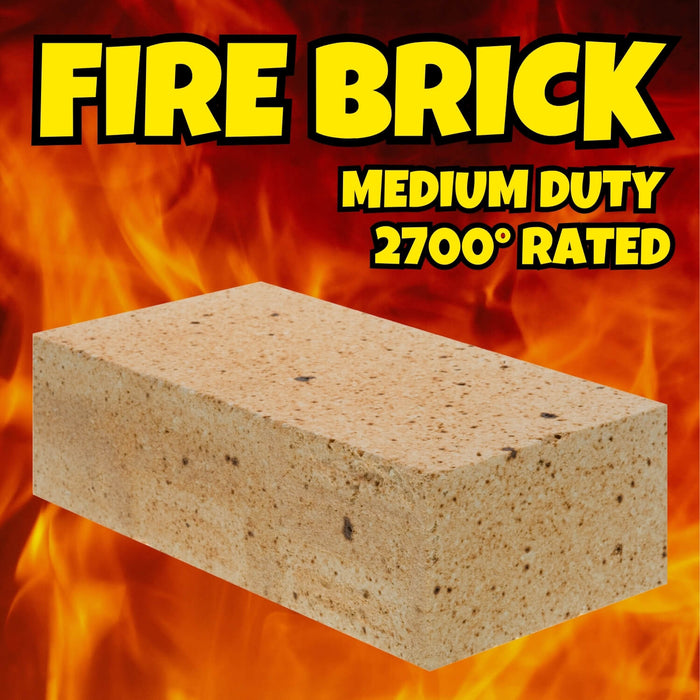
- Fire brick for the cooking floor and the oven walls and arch. Dense, medium duty fire brick rated to 2,700°F is the right choice.
- Refractory mortar to bond the bricks. Outdoors, use a non-water-soluble mortar.
- Castable refractory cement for cast ovens like the Mattone Cupola and Cortile Barile, reinforced with stainless steel needles.
- Ceramic fiber blanket wrapped over the oven. It's required on a wood-fired oven, because fire brick stores heat but doesn't insulate.
- Perlite or vermiculite mixed with cement for an insulated hearth under the floor.
Refractory mortar vs. castable vs. high heat mortar
Refractory mortar (dry mix)
A heat-resistant mortar you mix with water to lay fire brick in thin, tight joints. Our dry-mix refractory mortar is non-water-soluble once cured, so it's the pick for outdoor pizza ovens, fire pits and fireplaces.
Castable refractory cement
Mixed and packed into a form like high-heat concrete, to cast an oven shell, forge lining or custom shape. Don't use it as mortar.
Premixed air-set mortar
High Heat Mortar (2,700°F) and Super Duty Mortar (3,000°F) come ready to use. They're water-soluble, so keep them to indoor fireplaces, wood stoves and kilns.
How much refractory material do I need?
- Mattone Barile: 160 fire bricks and about 6 bags (300 lb) of refractory mortar
- Mattone Barile Grande: 190 fire bricks and about 7 bags (350 lb) of refractory mortar
- 28" Mattone Cupola: about 14 bags of castable refractory
- Cortile Barile: about 9 bags of castable refractory, plus a small fire brick cooking floor
Pizza ovens use far more mortar than typical fire brick projects because of their wider joints. Every set of FREE BrickWood pizza oven plans includes a complete materials list.
Homemade high-heat mortar
Many oven builders mix their own: 3 parts fine silica sand, 1 part hydrated lime, 1 part fire clay and 1 part Portland cement. These ingredients are commonly stocked at local landscape and masonry supply stores.
Refractory materials FAQ
Is refractory cement the same as refractory mortar?
No. Refractory mortar bonds bricks together in thin joints. Castable refractory cement is poured or packed into a form to make solid shapes.
Can I use regular mortar or brick in a pizza oven?
Not where it faces the fire. Regular brick and mortar crack and crumble under repeated heating. Use fire brick and refractory mortar on every surface the fire touches.
How hot can these materials get?
Our fire brick, refractory mortar and castable are rated to 2,700°F, Super Duty mortars to 2,900°F and 3,000°F, and ceramic fiber blanket to 2,300°F. A pizza oven floor runs about 1,200 to 1,400°F under the flames.
Can I return refractory materials?
Refractory products are non-refundable once shipped, so contact us before you order if you're unsure what you need.
14 products


