




Fireside • Care & Maintenance
Pizza Oven Covers and Sealer: How to Protect a Brick Pizza Oven from Rain, Snow and Freezing
Whether to cover your pizza oven, how to seal it in two coats, and the door and chimney cap every brick pizza oven needs to stay dry through the wet season.
A brick pizza oven can handle 900°F fires, but plain old rain is its biggest enemy. Brick, stone, stucco and grout soak up water like a sponge. A wet oven takes far longer to heat, burns through extra firewood just to dry out, and in cold climates the water that gets into the masonry freezes, expands and slowly opens up cracks.
Most people's first thought is a cover. Covers can be great, but they aren't the right answer for every backyard, and they're only one part of keeping an oven dry. In this guide we'll explain when a cover makes sense and when the wind will shred it, how to seal your oven the way we recommend, and the simple daily habits (a door on the front and a cap on the chimney) that keep the inside of your oven dry all year.
Still planning your build? Get the FREE step-by-step pizza oven plans, and you can build these protections in from day one.
Protecting Your Pizza Oven: Quick Answers
- Always use a door and a chimney cap. The door keeps rain, wind and snow out of the oven opening, and the cap keeps rain from coming straight down the chimney. These two do the most work.
- Seal the outside in two coats. Scrub the oven clean, let it dry thoroughly, apply a coat of breathable masonry sealer, wait a couple of days, then apply a second coat.
- Our sealer pick: Eco Advance Concrete/Masonry Siloxane Waterproofer. It's clear, breathable and non-toxic.
- Never seal the inside of the oven or the firebrick cooking surface.
- Covers: great in areas without much wind. In high-wind areas, a cover rubs against the masonry and is usually destroyed quickly.
- No standard covers: every finished oven is different, so a custom cover has to be made to your oven's measurements.
- Reseal about every three years, or sooner when water stops beading on the surface.
Why Water Is the Real Enemy of a Brick Pizza Oven
Masonry looks solid, but brick, stone, stucco, mortar and grout are all full of tiny pores. When rain sits on them, they wick it in. That's why a wet oven is such a headache:
- Slow, smoky heat-ups. Before the oven can get hot, the fire has to boil off every bit of water in the masonry. A soaked oven can take two or three times as long to reach pizza temperature, and you'll burn a lot more firewood doing it.
- A wet firebrick cooking surface. Rain blowing in the front settles on the firebrick and soaks down into the sand bed beneath it. That's the slowest part of the oven to dry, and a damp cooking surface won't crisp a crust.
- Wet insulation. Ceramic fiber blanket insulates by trapping air. When it's wet, heat travels right through it, and you'll feel the outside of the oven getting hot until it dries out.
- Steam damage. Firing a soaked oven hard turns trapped water into steam. Steam pressure can pop small chips off the surface of brick (called spalling) and stress the mortar joints.
- Freeze-thaw cracking. Water expands about 9% when it freezes. Every freeze and thaw pushes on the pores and joints it's soaked into, so small cracks slowly get bigger.
The good news: none of this means your oven is fragile. A well-built oven that's sealed, capped and closed up when it's not in use will shrug off decades of weather. It just needs the right protection.
The Four Lines of Defense
Think of weatherproofing in layers. You don't need every layer in every backyard, but the first two are for everyone.
| Protection | What it keeps out | Who needs it |
|---|---|---|
| Pizza oven door | Rain, wind and snow blowing into the oven opening | Every oven |
| Chimney cap | Rain and snow falling down the chimney, plus birds and critters | Every oven |
| Masonry sealer (2 coats) | Rain soaking into the brick, stone, stucco and grout | Every oven with exposed masonry |
| Cover or roof | All weather, all the time | Areas without high winds (cover), or anyone who wants full shelter (roof) |
A sealed, capped oven with its door on keeps nearly all of the water out on its own. A cover or roof is the final layer that takes you the rest of the way.
Always Use a Door and a Chimney Cap

The two easiest ways to keep an oven dry are also the most important. Whatever else you do, always make sure you have a door to keep the rain, the wind and the snow from coming into your pizza oven, and always make sure you have a chimney cap to keep rain from coming down to the top of your oven.
The pizza oven door
The oven opening is the biggest hole in your oven, and wind-driven rain and snow will blow straight into it. Once inside, water lands on the firebrick cooking surface and wicks down into the sand bed beneath it, and that's the hardest part of the oven to dry.
A heavy steel door set in the opening whenever the oven isn't in use stops most of it. BrickWood's pizza oven door is laser-cut from thick 10-gauge steel and comes in two sizes: one for the Mattone Barile and Mattone Barile Grande, and a smaller one for the Cortile Barile and 28" Mattone Cupola. The same door holds heat in for baking bread and roasting the day after a pizza night.
Want a tighter fit? The optional rope gasket kit lines the edge of the door to close the small gaps between the steel and the brick.
The chimney cap

An open chimney is a funnel for rain. Water runs straight down the flue onto the top of the oven, where it soaks the masonry from the inside. Bricks or a board laid across the top only work until the first windstorm.
The BrickWood Exhaust Kit solves this for good. Its chimney cap extends well past the flue to shed rain and snow, and the spark arrestor locked inside it keeps out birds, squirrels and other critters. It's double-wall stainless steel, so it won't rust out after a few winters.
For the best protection, add the chimney damper. Closed when the oven isn't in use, it keeps cold air from pulling through the oven. Used with a pizza oven door, it also gives you up to 90% heat retention when compared to ovens without dampers.
Seal the joints around the chimney and base
Water often sneaks in at the seams, not through the face of the brick. Two spots deserve a bead of high-temperature silicone:
- Where the chimney anchor plate meets the oven. Apply a thick, continuous bead between the stucco (or veneer) and the anchor plate or chimney pipe to make a flexible, watertight seal.
- Where the oven shell meets the hearth. Seal the joint around the base of the oven, so rain running down the outside of the oven can't get underneath it.
If you're veneering your oven, seal these joints on the stucco shell before the veneer goes on. The stucco is the oven's real weatherproof layer, and the veneer is like siding over it.
How to Seal a Brick Pizza Oven
Sealing is the low-cost, high-value step most people skip. A good masonry sealer soaks into brick, stone, stucco and grout and makes rain bead up and roll off instead of soaking in. It also makes soot stains much easier to clean.
The sealer we recommend
We recommend Eco Advance Concrete/Masonry Siloxane Waterproofer. It's sold ready to use by the gallon at home improvement stores. Here's why it's our pick:
- It's a penetrating sealer. It soaks into the masonry instead of sitting on top as a film, so there's nothing to peel or flake off.
- It breathes. Siloxane repels liquid water but still lets water vapor escape. That matters on a pizza oven, which has to let the moisture inside it out every time you fire it.
- It dries clear and doesn't change the look of your brick, stone or stucco.
- It's low-odor and non-toxic. Some masonry sealers contain harsh chemicals that can give off nasty fumes when they're heated. Your oven gets hot and you're cooking food in it, so stick with a non-toxic sealer.
- It works on everything outside your oven: brick, natural and manufactured stone, stucco, pavers and block.
Step-by-step: sealing your oven
- Scrub the oven clean. Wash the outside of the oven with a stiff brush and water to remove soot, dirt, ash and loose material. Sealer locks in whatever is on the surface, so get the soot stains off above the door first (see cleaning below).
- Let it dry thoroughly. The masonry needs to be dry, not just dry-looking, for the sealer to soak in. Wait for two or three dry days in a row. Sealer applied to damp masonry can't penetrate and may look blotchy.
- Apply the first coat. Spray it on with a garden pump sprayer or brush it on, starting at the bottom and working up. Flood the surface so it soaks in evenly, and don't thin the sealer. Cover the firebrick cooking surface and the oven opening first, and protect nearby plants and wood from overspray.
- Let it dry for a couple of days. Give the first coat time to soak in and cure.
- Apply the second coat. The second coat fills in anything the first coat missed, including the tops of the barrel and chimney that take the most rain.
Check your weather forecast before you start. Apply sealer on a dry day when no rain is expected, and when the temperature is above the minimum on the product label.
What to seal (and what not to)
Seal these
- The stucco shell, painted or unpainted
- Brick, stone or tile veneer, and the grout between it
- The hearth frame bricks around the front of the oven
- The chimney masonry and the top of the oven, which take the most rain
- The oven base, whether it's block, brick, stone or stucco
Never seal or coat these
- The inside of the oven
- The firebrick cooking surface. Your food cooks right on it.
- Anything that will get hot enough to burn a coating off
New ovens: when to seal
Seal a new oven once the stucco, mortar and grout have fully cured and the shell has had a few dry days. Many builders seal before their curing fires, because the fires leave soot above the door that you'd otherwise have to scrub off first. If your oven has already been fired, that's fine: scrub, dry and seal.
Leaving the stucco plain or painting it
If you like the look of plain stucco, you can leave it as is and seal it with masonry sealer, then reseal it about every three years. If you'd rather paint, use a paint made for concrete patios and porch floors, not exterior house paint. House paint is made for vertical walls and won't hold up on the top of an oven. A painted shell can also get a coat of masonry sealer on any exposed brick around it.
When to reseal
Sealers wear down with sun and weather. Plan on resealing about every three years. To check, splash some water on the oven: if it beads up and rolls off, you're still protected. If it darkens the surface and soaks in, it's time to scrub, dry and seal again.
Should You Cover Your Pizza Oven?

A cover keeps an oven perfectly dry, and plenty of BrickWood owners love theirs. But covers come with one big catch, and you should know about it before you spend money on one.
Covers and wind don't mix
Pizza oven covers are made of fabric: vinyl, polyester, canvas or plastic. Fabric can rip fairly easily, and rippable fabric doesn't go well with masonry. Every brick corner, stone edge and chimney cap is rough and hard. When the wind blows, it whips the cover back and forth against those edges, and the masonry wears through the fabric like a dull razor.
- If you live where it doesn't get high winds, a cover is a great investment and can last for years.
- If your area gets high winds, covers are usually destroyed pretty quickly. We're in a very windy town ourselves, and we've seen a brand-new custom canvas cover shredded in under two weeks after one big windstorm.
In windy areas, put your money into sealer, a door and a chimney cap instead, and keep a cheap tarp on hand for big storms.
Why there's no standard cover for a BrickWood oven
Like snowflakes, no two BrickWood ovens are identical. Every oven starts from the same plans, but each owner finishes it differently: brick, stone, stucco or tile, a wider hearth extension, a taller chimney, a different base. Because the final cover depends on your finished oven, there's no one set of cover dimensions for any oven model, and no one-size cover that fits them all.

The answer is a custom cover. There are companies that sell custom covers made to your measurements. If you go that route:
- Measure carefully. Measure your finished oven's width, depth and height, and the chimney's height, diameter and position.
- Add an inch or two around the chimney so the cover slips over it easily.
- Choose heavy-duty fabric, such as a thick vinyl, and tie-downs or elastic that keep it snug.
- Consider an access flap over the front, so you can open the oven without taking off the whole cover.
- Allow a few weeks for it to be made and shipped.


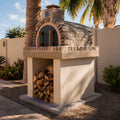
One owner's oven, three ways: a custom cover made to fit the oven, the chimney and the base, with a front flap that opens so the stacked firewood stays dry and easy to reach.
The budget option: tarps and plastic sheeting
The quickest and least expensive way to protect an oven is a plastic tarp or a sheet of heavy plastic, held down with bungee cords. Neither is pretty, but both work. Tarps are thicker and last longer, while clear plastic sheeting is less noticeable in the yard. Many owners in windy areas keep one handy and throw it over the oven only when heavy rain or a storm is coming, then take it off when it passes.
How to use a cover the right way
- Cover only a cold, dry oven. Never put a cover on a warm oven, and let a wet oven dry out before you cover it so you don't trap moisture underneath.
- Keep the door on and the cap on under the cover. The cover is extra protection, not a replacement for them.
- Uncover it now and then on dry, sunny days during a long wet season, so any condensation underneath can dry out.
- Check it after windstorms for rubbing and tears, especially at corners and around the chimney.
Roofs, Pavilions and Shelters
A roof is the ultimate weather protection. It keeps the oven dry without anything to put on or take off, and it gives you a dry place to cook in the rain. Some owners build a simple gable roof over the oven itself, while others put the oven under a pavilion or covered patio as part of an outdoor kitchen.
A roof over a wood-fired oven needs to be planned around the chimney. If the oven sits under any roof, the chimney has to pass up through it with the proper parts and clearances, and rise high enough above it to draft well. Our pizza oven chimney guide explains the 3-2-10 rule and the 2-inch clearance to combustibles. Check your local building and fire codes before you build.
How to Winterize a Pizza Oven: Checklist
Before the wet or freezing season sets in, take an afternoon to get your oven ready. Here's the checklist we recommend:
- Burn the oven hot one last time to dry it out completely, then let it cool
- Remove the ashes once they're completely cold
- Look over the outside for cracks in the stucco, grout or mortar, and seal any small ones with exterior caulk
- Check the silicone bead around the chimney anchor plate and the joint around the base, and redo any gaps
- Splash-test the masonry: if water soaks in instead of beading, scrub, dry and apply two coats of sealer
- Check the cap and spark arrestor for soot and buildup
- Set the door in the opening, and close the damper if you have one
- Store your firewood dry and off the ground, under cover
- In areas without high winds, put the cover on the cold, dry oven
- Your oven is ready for winter
Planning to keep cooking all winter? Skip the cover and keep the door and cap on between bakes. Dry firewood matters more than ever in cold weather. Our firewood guide explains how to season and store it.
Cooking in Cold Weather and Snow
A well-insulated brick oven is a great winter cooker. Once it's hot, the ceramic fiber blanket holds the heat in no matter what the thermometer says outside. A few habits make cold-weather firing easy:
- Heat it slowly. Cold masonry that heats too fast can crack from thermal shock. Start with a small fire and build it up gradually over the first 30 to 60 minutes, especially below freezing.
- Clear the snow first. Brush snow away from the door, the hearth and the chimney cap before you light a fire. It's fine to fire an insulated, finished oven with some snow on top.
- Allow extra time. Expect the oven to take longer to reach pizza temperature in cold weather, and keep the door handy to hold heat between pizzas.
- Keep your dough warm. Below freezing, dough stiffens fast outdoors. Keep it inside until you're ready to stretch it.
- Skip the downpours. If the rain starts after the fire is going, grab an umbrella and keep cooking. But it's not worth starting a fire in a heavy rain.
What to Do If Your Pizza Oven Gets Soaked
Forgot to cover it before a week of rain? It happens. Your oven isn't ruined. It's just wet, and it needs to be dried out gently.
- Don't build a big fire. A hot fire in a soaked oven turns trapped water into steam faster than it can escape, which can crack mortar and chip brick.
- Go back to curing fires. Dry the oven with the same small, low fires you used when it was new, building them up a little each day. Our curing guide walks through the schedule.
- Leave the door off between fires. Moisture needs a way out through the opening and the chimney. The only exception: put the door back on and cover the oven if more rain is coming, so you don't lose ground.
- Find where the water got in. Check the door fit, the top of the chimney, the silicone around the anchor plate, the joint at the base of the oven and the grout on top of the oven. Seal any gaps or cracks once everything is dry.
If the outside of the oven feels hotter than usual during the first fires, the insulation is probably wet. It's normal, and it will go away once the oven dries out.
How to Clean a Pizza Oven and Keep It in Shape
Inside the oven
A wood-fired oven mostly cleans itself: the heat burns off spills and grease. All you need to do is keep the ash under control.
- Remove cold ashes before each fire, or whenever they build up. Ash holds moisture, so don't leave a pile of it sitting in the oven over a wet winter.
- Brush the firebrick cooking surface with a brass-bristle oven brush after the fire is pushed aside.
- Never use water, soap or chemical cleaners inside the oven. Burned-on spills turn to ash in the next fire.
Soot on the outside
A little soot above the door is part of the character of a wood-fired oven, and plenty of owners leave it. If you'd like to clean it, start gentle and work up:
- Warm water with a little dish soap and a soft brush or old toothbrush, then rinse
- A paste of baking soda and water, left on for about 15 minutes, then scrubbed and rinsed
- For stubborn stains, 1 part white vinegar to 7 parts water, followed by a good rinse
Lay a towel or tarp over the firebrick cooking surface before you clean above the door, so nothing drips into the oven. A sealed exterior is much easier to clean, because the soot sits on the surface instead of soaking in.
Once a year
- Splash-test your sealer, and reseal about every three years
- Check the chimney cap, spark arrestor and anchor plate seal (see the chimney guide)
- Check the door and its gasket for a snug fit
- Look for loose firebrick on the cooking surface, and level any that have settled with a little sand underneath
Weatherproofing Mistakes to Avoid
Avoid these
- Leaving the opening and chimney open. No door and no cap is the number-one way ovens get soaked.
- Sealing the inside of the oven or the firebrick cooking surface.
- Using a glossy, film-forming sealer or house paint that traps moisture in the masonry.
- Sealing over soot or damp masonry. Scrub first and let it dry for a few days.
- Applying only one coat. Two coats, a couple of days apart.
- Counting on a cover in a high-wind area. The masonry will wear right through it.
- Covering a warm or wet oven, which traps moisture under the cover.
- Building a big fire in a soaked or frozen oven. Dry it out low and slow.
Frequently Asked Questions
Should I cover my brick pizza oven?
If you live where it isn't very windy, yes, a cover is a great way to keep rain and snow off a brick pizza oven. If your area gets high winds, a cover usually won't last: the wind whips the fabric against the brick and stone corners, which wear through it like a dull razor. In windy areas, rely on two coats of masonry sealer, a pizza oven door and a chimney cap, and throw a tarp or heavy plastic sheeting over the oven only before big storms.
Does BrickWood sell pizza oven covers?
No. Every BrickWood oven is finished differently, with its own veneer, hearth extension, chimney height and base, so no single cover could fit them all. Companies that make custom covers will build one to your oven's exact measurements. Measure carefully and add an inch or two around the chimney.
What is the best sealer for a brick pizza oven?
Use a clear, breathable, penetrating masonry water repellent, such as a siloxane waterproofer. We recommend Eco Advance Concrete/Masonry Siloxane Waterproofer. It soaks into brick, stone, stucco and grout, lets trapped moisture escape as vapor, dries clear and is low-odor and non-toxic. Avoid glossy film-forming sealers and paints that trap moisture in the masonry.
How many coats of sealer does a pizza oven need?
Two. Scrub the outside of the oven clean and let it dry thoroughly, apply the first coat, let it dry for a couple of days, then apply a second coat.
Should I seal the inside of my pizza oven?
Never. Don't put sealer, paint or any coating on the inside of the oven or on the firebrick cooking surface. Your food cooks directly on that firebrick, and coatings can burn off and release fumes when the oven is fired. Seal only the outside of the oven, the hearth frame bricks and the base.
How often should I reseal my pizza oven?
About every three years, or sooner if water stops beading up and soaks into the brick, stone or stucco instead. Scrub off soot and let the oven dry before every new coat.
Can I use a wood-fired oven in the winter?
Yes. A well-insulated BrickWood oven bakes in cold weather, and you can even fire it when there's snow on it. Brush the snow away from the door and chimney, and heat a cold oven slowly with a small fire for the first 30 to 60 minutes so the masonry warms gradually and doesn't crack from thermal shock.
What should I do if my pizza oven gets soaked?
Don't panic, and don't build a big fire. Dry it out with small, low curing fires, like you did when the oven was new. Leave the door off between fires so moisture can escape, cover the oven if more rain is coming, and then find and fix the spot where the water got in.
Can water freeze and crack my pizza oven?
Water that soaks into masonry expands when it freezes, and repeated freeze-thaw cycles widen small cracks over time. Keeping water out is what prevents this: a sealed exterior, a door, a chimney cap and sealed joints around the chimney and base.
How do I clean soot off my pizza oven's brick or stone?
Start gently: a paste of baking soda and water, left on for 15 minutes and rinsed, or warm water with a little dish soap and a soft brush. For tougher stains, try 1 part white vinegar to 7 parts water. Cover the firebrick cooking surface first so nothing drips into the oven. A sealed exterior cleans up much more easily.
Keep Your Oven Dry and Cooking for Decades
A brick pizza oven is built to last a lifetime, as long as you keep the water out. Put a door on the front and a cap on the chimney, seal the outside in two coats and reseal it every few years. Add a cover if your yard stays calm, or keep a tarp handy for storms if it doesn't.
Door on, cap on, sealed twice. That's a dry oven.
Still planning? Get the FREE pizza oven plans or explore BrickWood pizza oven kits. Have a weatherproofing question? Ask it on the BrickWood builder forum.
Keep Reading
This guide is general information. Always follow the instructions for your BrickWood oven and the label directions for any sealer, paint or cleaner you use, supervise every fire, and follow your local building codes, fire codes and burn rules.


